The ideas for our children’s books are often inspired by my kids. Dumpy the Dump Truck was directly inspired by my son Sam’s love of trucks, and The Very Fairy Princess was inspired by my very fairy princess daughter, Hope. But we have often pulled ideas from other sources as well. Here are a few examples:
Simeon’s Gift – a story we wrote together when I was a child
The Great American Mousical – A mouse in my mother’s dressing room once in a Broadway theatre, plus countless mice in the theatre I ran for many years
Dragon: Hound of Honor – an entry found in a Reader’s Encyclopedia
Little Bo series – a ship’s cat we encountered once on vacation when I was a child
Julie Andrews’ Collection of Poems, Songs and Lullabies – a trusted editor
The point is, children’s book authors pull ideas from any number of areas. You can mine for story fodder from your own kids, kids you know, or from your own childhood. Try going through childhood photo albums and journals, looking at mementos, thinking about childhood friends, toys you loved, activities you used to engage in, hurdles you faced or challenges you overcame. Home movies or scrapbooks are great resources for ideas. Often it takes just one hook – one ticket stub, one photo – to spark an idea for a story.
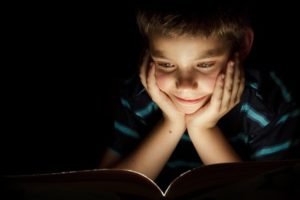
Other people’s children can provide great material as well – grandkids, cousins, nieces, nephews, students, neighbors – even a child you see in a restaurant or on the street. Get in the habit of kid-watching whenever you’re out and about (try to be discreet – “I’m a children’s book writer!” only goes so far when confronted with the glares of suspicious parents or policemen…) It’s hugely important to spend time with or observing kids on a regular basis so as to stay current with how they think and talk, and what their interests and concerns are. If you don’t have ready access to kids of the age you are writing for, find a way to connect with them, perhaps by joining a Big Brother/Big Sister program or volunteering to read at a local library or school.
As you troll for ideas, don’t be daunted by whether or not the subject has already been tackled by another author. Very few ideas are truly unique. While there are hundreds of children’s books about bunnies, pigs, ducklings and princesses, the more important question is, what distinguishes yours from the others? It’s all about your unique perspective, your take on the subject.